86-13612970675
 lily@wgydz.com


What Is a Power Management IC and How Does It Work?
2026/5/8 10:17:44
A Power Management IC, commonly known as a PMIC, is an integrated circuit designed to manage, regulate, distribute, and monitor electrical power inside an electronic system. As electronic devices become smaller, faster, and more power-efficient, power management has become one of the most important parts of circuit design. From smartphones and laptops to automotive electronics, industrial controllers, medical devices, and IoT modules, PMICs help ensure that every component receives the correct voltage and current at the right time.
In modern electronic products, different chips often require different operating voltages. A microcontroller may need 3.3V, a processor core may require around 1V, memory may use another voltage rail, and sensors or communication modules may have their own power requirements. Instead of using many separate power components, engineers often use a PMIC to integrate multiple power management functions into one compact device.
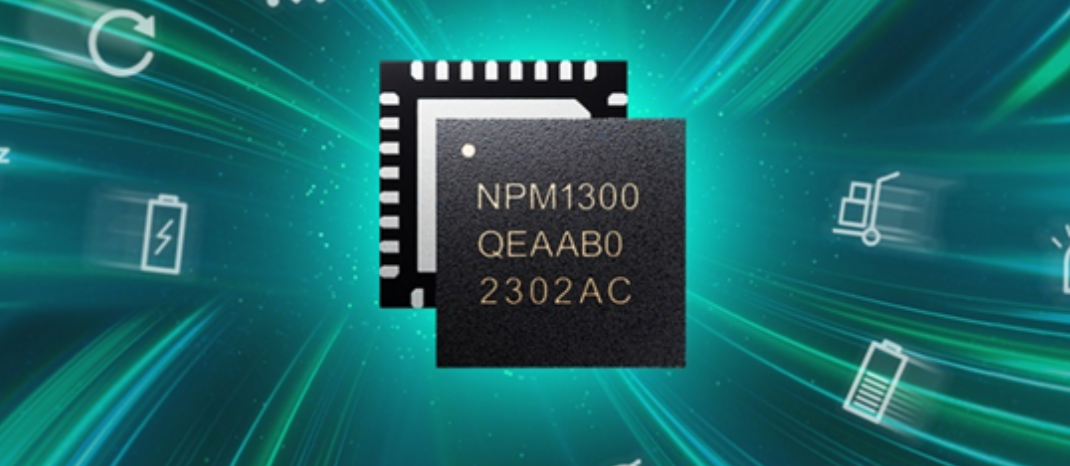
What Is Power Management IC?
Power Management IC is a semiconductor device that controls and optimizes the power supply of an electronic circuit. Its main purpose is to convert, regulate, sequence, protect, and monitor power. Depending on the design, a PMIC may include functions such as voltage regulation, battery charging, DC-DC conversion, power sequencing, load switching, overvoltage protection, thermal shutdown, and power monitoring.
In simple terms, a PMIC acts like a power control center for an electronic system. It takes power from a source, such as a battery, adapter, USB port, solar panel, or main power rail, and distributes stable and suitable power to different parts of the device.
Why PMICs Important?
Power management is critical because electronic components are sensitive to voltage and current conditions. If the voltage is too high, components may be damaged. If the voltage is too low, the system may become unstable or fail to operate correctly. If power is not delivered in the correct sequence, some processors, FPGAs, memory chips, or communication modules may not start properly.
PMICs help improve system reliability, efficiency, battery life, thermal performance, and overall product size. For portable devices, a high-efficiency PMIC can extend battery operating time. For industrial and automotive systems, robust power management helps protect circuits from harsh electrical environments. For AI, server, and data center hardware, efficient power conversion is essential for reducing heat and energy loss.
How Does a Power Management IC Work?
A PMIC works by receiving input power and converting or regulating it into one or more stable output voltages. The exact working principle depends on the type of PMIC and the functions integrated inside the chip.
1. Voltage Regulation
One of the most common functions of a PMIC is voltage regulation. Electronic systems often need stable voltage rails even when the input power changes. For example, a battery voltage may drop as the battery discharges, but the processor still needs a stable supply voltage.
PMICs usually regulate voltage using two common methods: linear regulation and switching regulation.
A linear regulator, such as an LDO regulator, provides a clean and low-noise output voltage. It is often used for noise-sensitive circuits such as RF modules, analog sensors, audio circuits, and precision measurement systems. However, linear regulators may generate more heat when the input-output voltage difference is large.
A switching regulator, such as a buck converter or boost converter, uses high-frequency switching to convert voltage efficiently. Buck converters step down voltage, while boost converters step up voltage. Switching regulators are widely used in systems that require high efficiency, especially battery-powered devices, industrial equipment, automotive electronics, and communication devices.
2. Power Conversion
Many PMICs include DC-DC converter circuits. These converters change one DC voltage level into another. For example, a device powered by a 12V input may need 5V, 3.3V, 1.8V, and 1.2V rails. A multi-channel PMIC can generate several regulated outputs from a single input source.
This integration reduces the number of external components, saves PCB space, simplifies design, and improves system power efficiency.
3. Power Sequencing
Power sequencing means turning different voltage rails on and off in a specific order. Some processors, FPGAs, SoCs, and memory devices require strict power-up and power-down sequences. If the sequence is incorrect, the chip may fail to boot, operate abnormally, or even become damaged.
A PMIC can control the timing of each output voltage rail. It can enable one rail first, wait for it to stabilize, then enable the next rail. This makes PMICs especially useful in complex embedded systems, AI modules, telecom equipment, and automotive control units.
4. Battery Charging and Battery Management
For portable electronics, a PMIC may include battery charging and battery protection functions. It can manage charging current, charging voltage, battery temperature, and charging status. Some PMICs support lithium-ion and lithium-polymer battery charging, USB charging, power path management, and battery fuel gauge functions.
Power path management allows a device to operate from an external power adapter while charging the battery at the same time. This is commonly used in smartphones, tablets, handheld instruments, POS terminals, and portable medical devices.
5. Protection Functions
A PMIC often includes protection features to improve safety and reliability. These may include overvoltage protection, undervoltage lockout, overcurrent protection, short-circuit protection, thermal shutdown, reverse current protection, and fault reporting.
These protection features are important because real-world power conditions are not always stable. Automotive systems may experience voltage transients. Industrial systems may face electrical noise. Consumer devices may be connected to different adapters or chargers. A PMIC helps protect sensitive components from abnormal power events.
Common Types of Power Management ICs
Power management ICs cover many product categories. Some PMICs integrate multiple functions, while others are designed for one specific power task.
1. DC-DC Converter IC
A DC-DC converter IC converts one DC voltage into another. Common types include buck converters, boost converters, buck-boost converters, and isolated DC-DC controllers. These are widely used in industrial control, automotive electronics, communication equipment, and portable devices.
2. LDO Regulator
An LDO regulator provides a stable low-noise output voltage. It is suitable for analog circuits, RF modules, sensors, microcontrollers, and other noise-sensitive applications.
3. Battery Charger IC
A battery charger IC manages the charging process for rechargeable batteries. It is commonly used in handheld devices, wearable electronics, power banks, smart meters, and portable instruments.
4. LED Driver IC
An LED driver IC controls current for LED lighting or display backlighting. It helps maintain brightness, efficiency, and protection for LED circuits.
5. Motor Driver IC
A motor driver IC controls motors in robotics, automotive systems, home appliances, industrial machines, fans, and pumps. Some motor driver ICs also include current regulation and protection features.
6. Power Switch and Load Switch IC
A load switch IC controls power delivery to different parts of a circuit. It can turn power rails on or off, reduce standby power consumption, and protect against excessive current.
7. PMIC for Processors and SoCs
Advanced processors, application processors, FPGAs, and SoCs often require multiple voltage rails. A dedicated PMIC can provide several outputs, sequencing, monitoring, and control interfaces such as I2C or SPI.
Where Are Power Management ICs Used?
PMICs are used in almost every modern electronic device. Common applications include:
- Smartphones, tablets, and laptops
- IoT devices and wireless modules
- Automotive electronics and EV systems
- Battery management systems
- Industrial automation equipment
- Medical electronics
- Consumer electronics
- Servers and data center hardware
- Telecommunication equipment
- Smart home devices
- LED lighting systems
- Security and surveillance products
Key Parameters When Choosing a PMIC
When selecting a Power Management IC, engineers and purchasing teams should consider several important specifications.
Input Voltage Range
The input voltage range must match the system power source. For example, battery-powered devices, automotive systems, and industrial power supplies may all require different input voltage ratings.
Output Voltage and Output Current
The PMIC must provide the correct output voltage and enough current for each load. Insufficient output current can cause voltage drops, system resets, or unstable operation.
Efficiency
High efficiency reduces power loss and heat generation. This is especially important for portable electronics, high-power systems, and thermally constrained designs.
Noise and Ripple
For analog, RF, audio, and precision circuits, low output noise and low ripple are important. In these cases, an LDO regulator or a low-noise PMIC may be preferred.
Package Size
Compact packages are important for space-limited products such as wearables, mobile devices, IoT sensors, and compact industrial modules.
Protection Features
Protection functions such as overcurrent protection, overtemperature protection, and undervoltage lockout help improve system reliability.
Operating Temperature
Industrial and automotive applications may require wide operating temperature ranges and higher reliability grades.
PMIC vs Discrete Power Design
A power system can be built using separate discrete components or an integrated PMIC. Discrete designs may offer flexibility, but they usually require more PCB space and more design effort. A PMIC integrates multiple functions into one chip, helping reduce component count, simplify layout, and improve system reliability.
For simple applications, a single regulator may be enough. For complex systems with multiple voltage rails, battery charging, sequencing, and protection requirements, a PMIC is often the better choice.
Advantages of Using a Power Management IC
- Reduces PCB space and component count
- Improves power efficiency
- Extends battery life in portable devices
- Simplifies power supply design
- Provides stable voltage rails
- Supports power sequencing and system control
- Improves protection and reliability
- Helps reduce heat generation
- Supports compact and lightweight product designs
Power Management ICs in Modern Electronics
As electronic systems continue to become more powerful and compact, PMICs are becoming increasingly important. AI hardware, electric vehicles, industrial automation, 5G communication, IoT devices, and portable electronics all require efficient and reliable power management. A well-selected PMIC can directly affect product performance, battery life, thermal design, safety, and long-term reliability.
For electronic component buyers, PMICs are also a key product category because they are widely used across many industries. Popular search terms often include power management IC, PMIC chip, DC-DC converter IC, LDO regulator, battery charger IC, voltage regulator IC, and power supply IC. These keywords usually reflect strong design or purchasing intent.
FAQ About Power Management ICs
What does PMIC stand for?
PMIC stands for Power Management Integrated Circuit. It is a chip used to manage and regulate power in electronic systems.
What is the main function of a PMIC?
The main function of a PMIC is to convert, regulate, distribute, monitor, and protect power supplied to different parts of an electronic circuit.
Is a voltage regulator the same as a PMIC?
A voltage regulator is one type of power management device, but a PMIC may include multiple voltage regulators and additional functions such as sequencing, battery charging, monitoring, and protection.
Where are PMICs commonly used?
PMICs are commonly used in smartphones, laptops, IoT devices, automotive electronics, industrial systems, medical devices, communication equipment, and consumer electronics.
How do I choose the right Power Management IC?
To choose the right PMIC, consider the input voltage, output voltage, output current, efficiency, package size, thermal performance, protection features, operating temperature, and application requirements.
Why are PMICs important for battery-powered devices?
PMICs help improve battery life by converting power efficiently, reducing standby consumption, managing charging, and supplying stable voltages to different circuits.
Conclusion
A Power Management IC is an essential component in modern electronic design. It controls how power is converted, regulated, distributed, and protected inside a device. By integrating functions such as voltage regulation, DC-DC conversion, battery charging, sequencing, and fault protection, PMICs help engineers build smaller, more efficient, and more reliable products.
Whether used in portable electronics, automotive systems, industrial equipment, IoT devices, or data center hardware, the PMIC plays a key role in system performance and stability. For designers and buyers, understanding how PMICs work can make it easier to select the right component for a specific application.
Related Information
 2024-10-25

- 3000+ Daily average RFQ Volume

- 20,000.000 Standard Product Unit

- 3000+ Worldwide Manufacturers

- 15,000+ In-stock Warehouse