86-13612970675
 lily@wgydz.com


HOW MUCH POWER IS LOST WHEN YOU CONVERT AC TO DC?
2024/10/25 11:42:55
Converting AC to DC power is an essential process in virtually every electronic system-from USB chargers and LED drivers to industrial automation and medical devices.
But what many users and even engineers underestimate is that this conversion is never lossless. Whether it's heat, parasitic dissipation, or inefficiencies in design, power loss is a built-in reality.
Understanding where, why, and how power is lost during AC to DC conversion can help engineers design more efficient systems and make smarter component choices.
Why Converting AC to DC Involves Power Loss
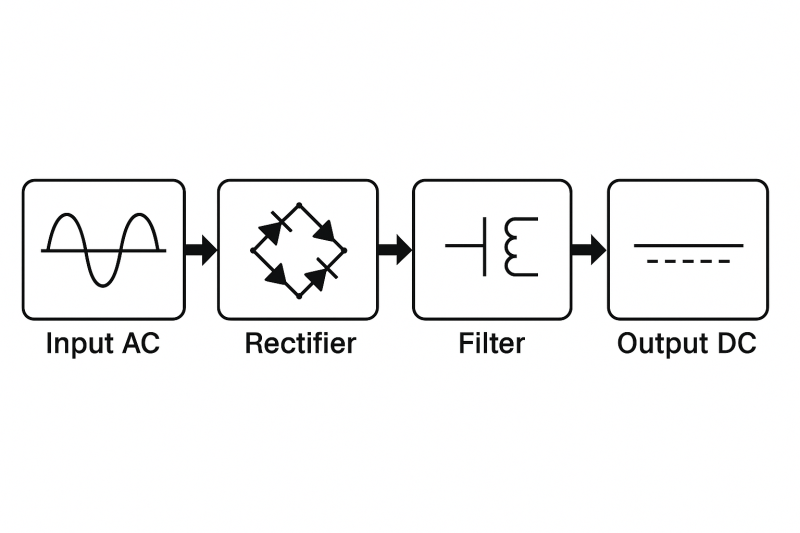
At its core, converting AC to DC involves several stages: rectification, filtering, and voltage regulation. Each of these steps introduces its own inefficiencies:
Rectification: Converts AC's sinusoidal waveform into pulsating DC using diodes or bridge rectifiers. These components drop voltage-typically around 0.7V for silicon diodes-resulting in power lost as heat.
Filtering: Uses capacitors or inductors to smooth the pulsating signal. These passive components exhibit ESR and core losses, which convert some electrical energy into thermal energy.
Regulation: Stabilizes voltage via either linear regulators which burn excess voltage as heat or switching regulators which are more efficient but still experience switching and conduction losses.
In short, each conversion stage performs useful work but extracts a cost from the original input power.
Related Information
 2024-10-25


- 3000+ Daily average RFQ Volume

- 20,000.000 Standard Product Unit

- 3000+ Worldwide Manufacturers

- 15,000+ In-stock Warehouse